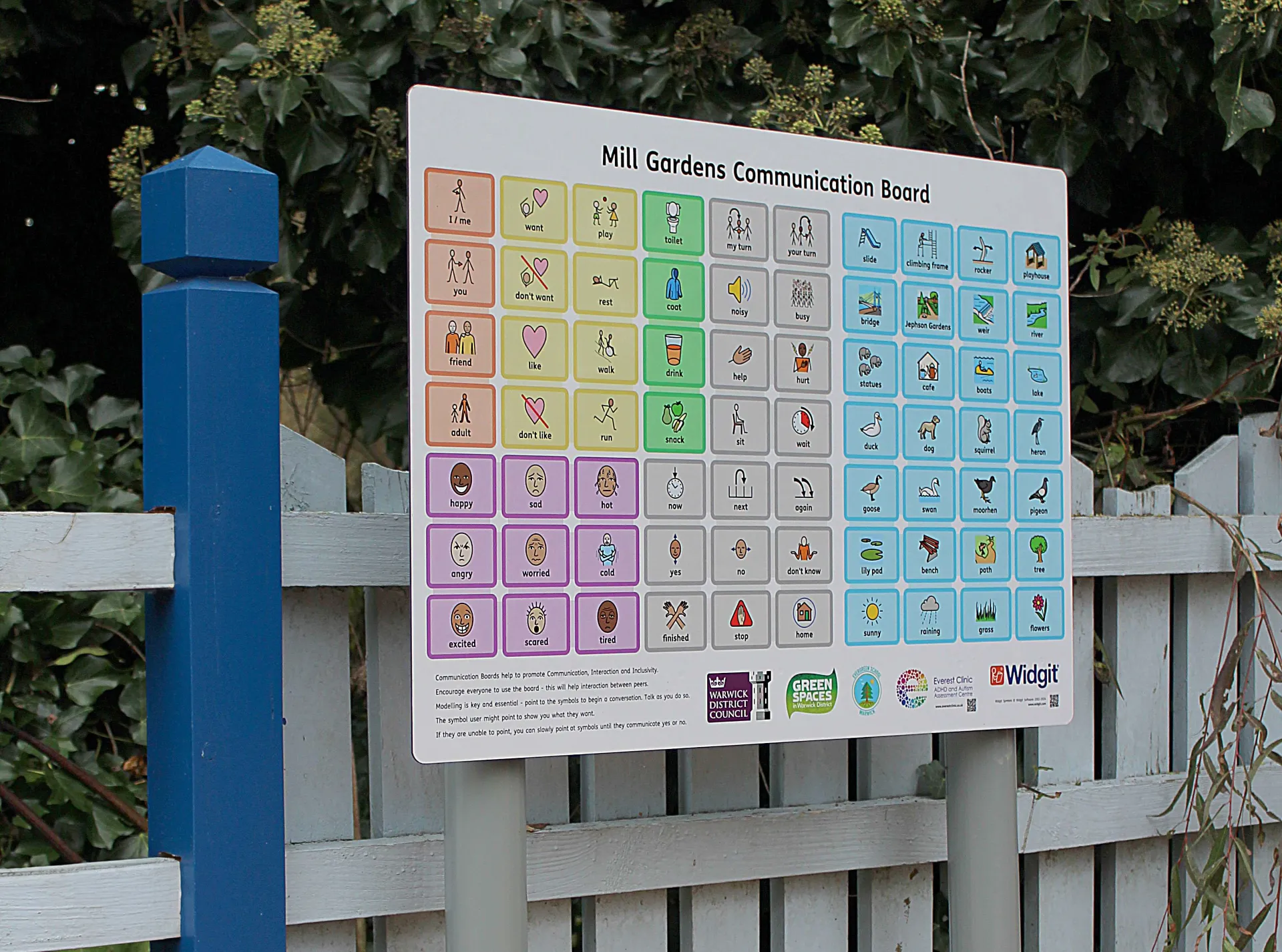
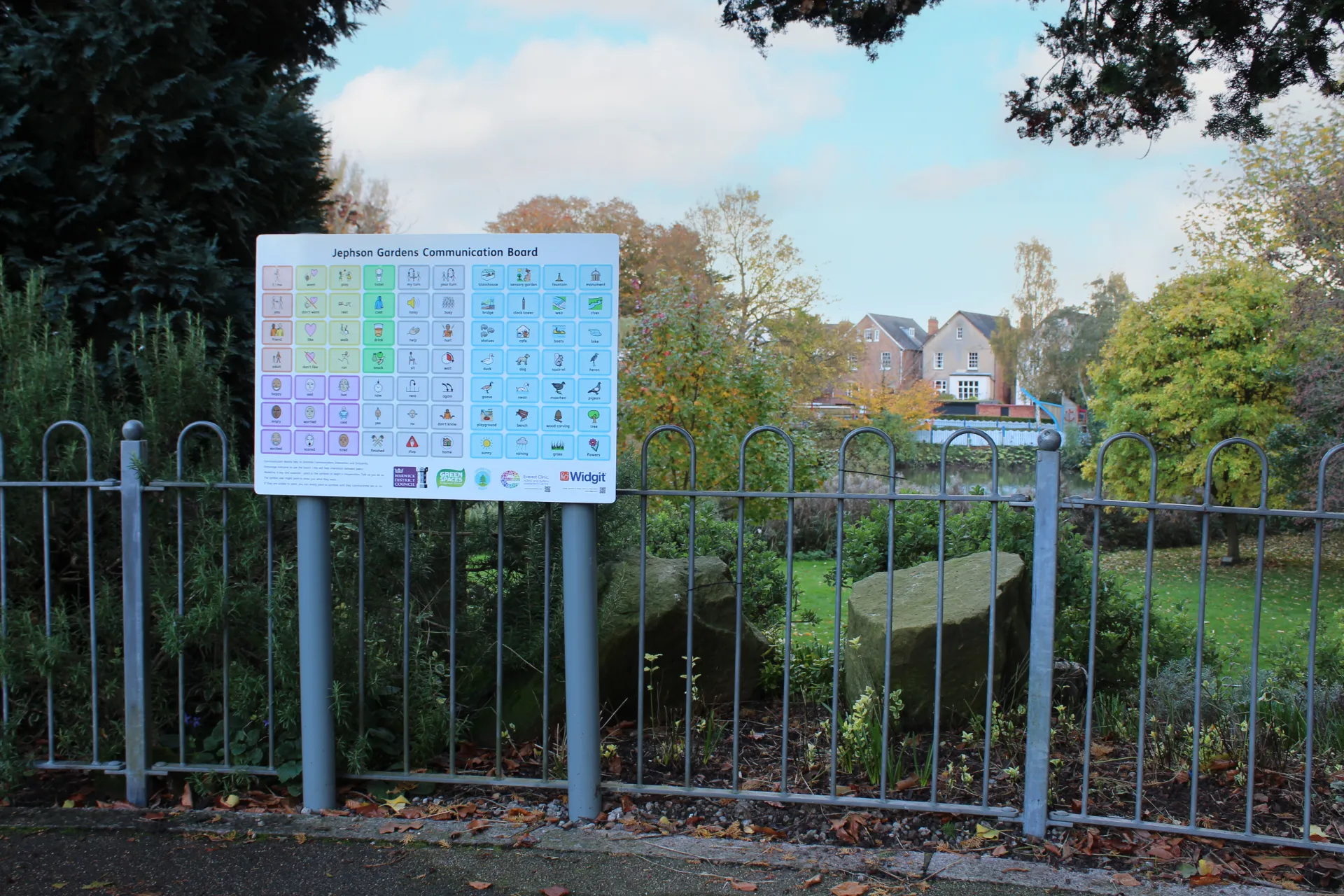
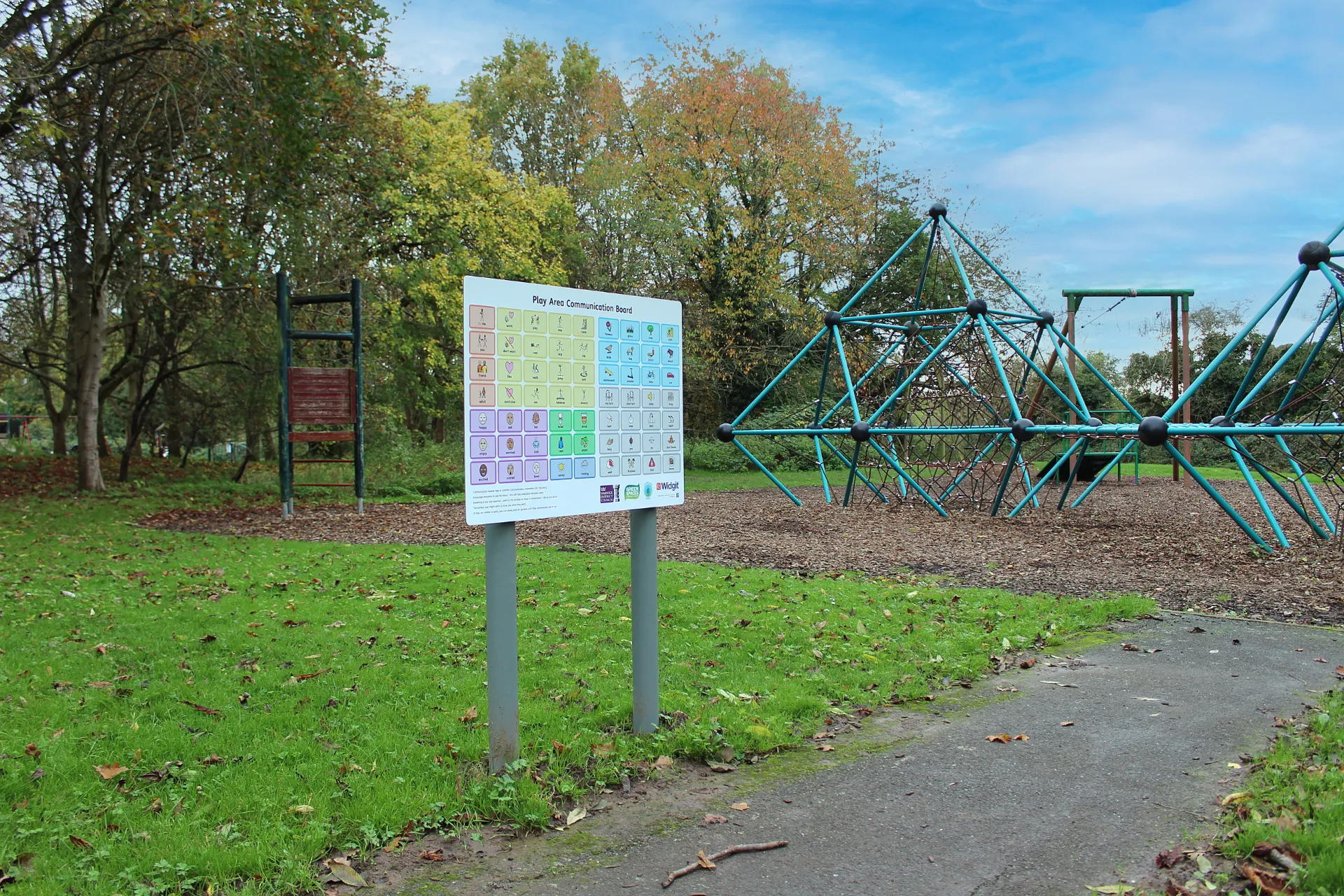
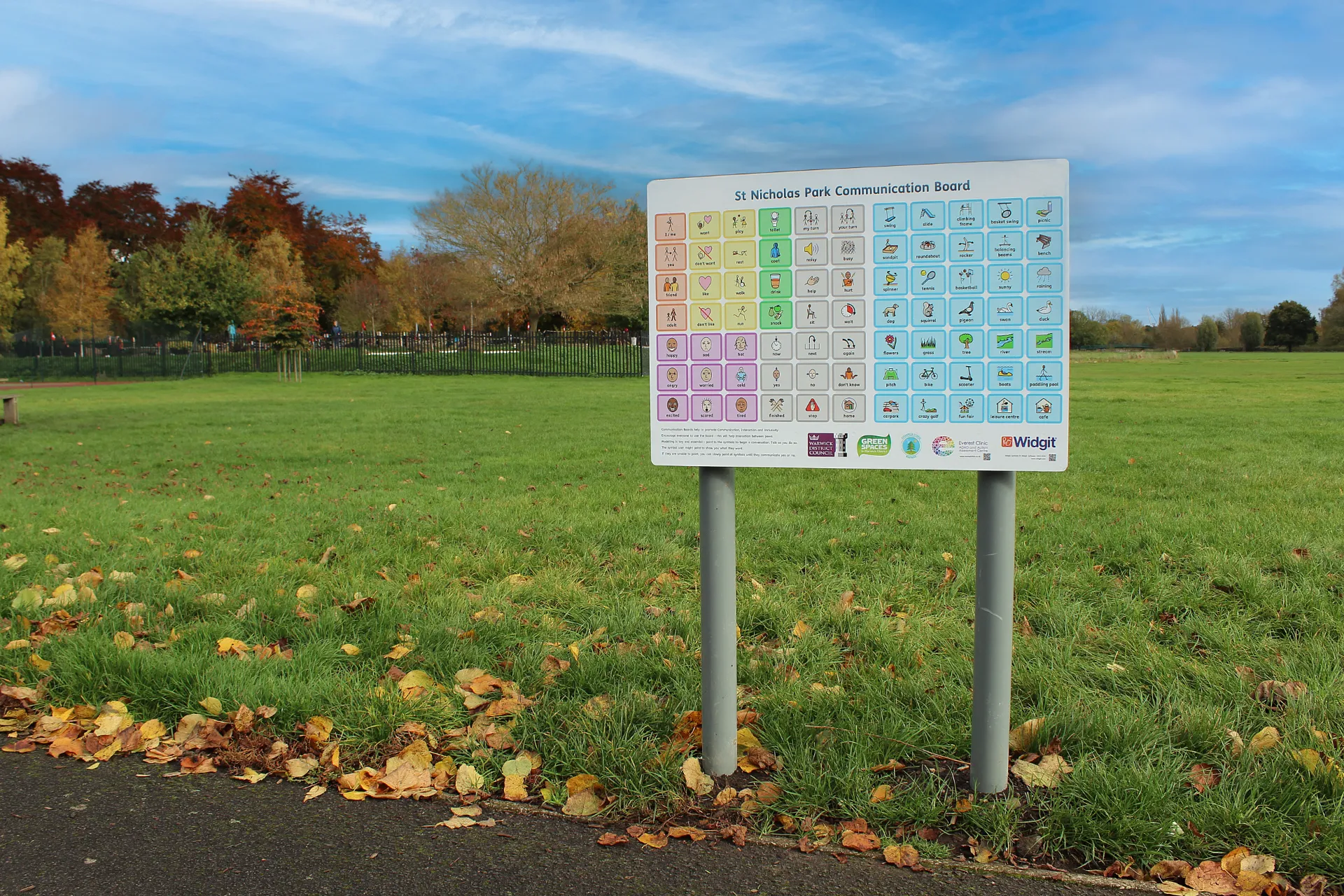
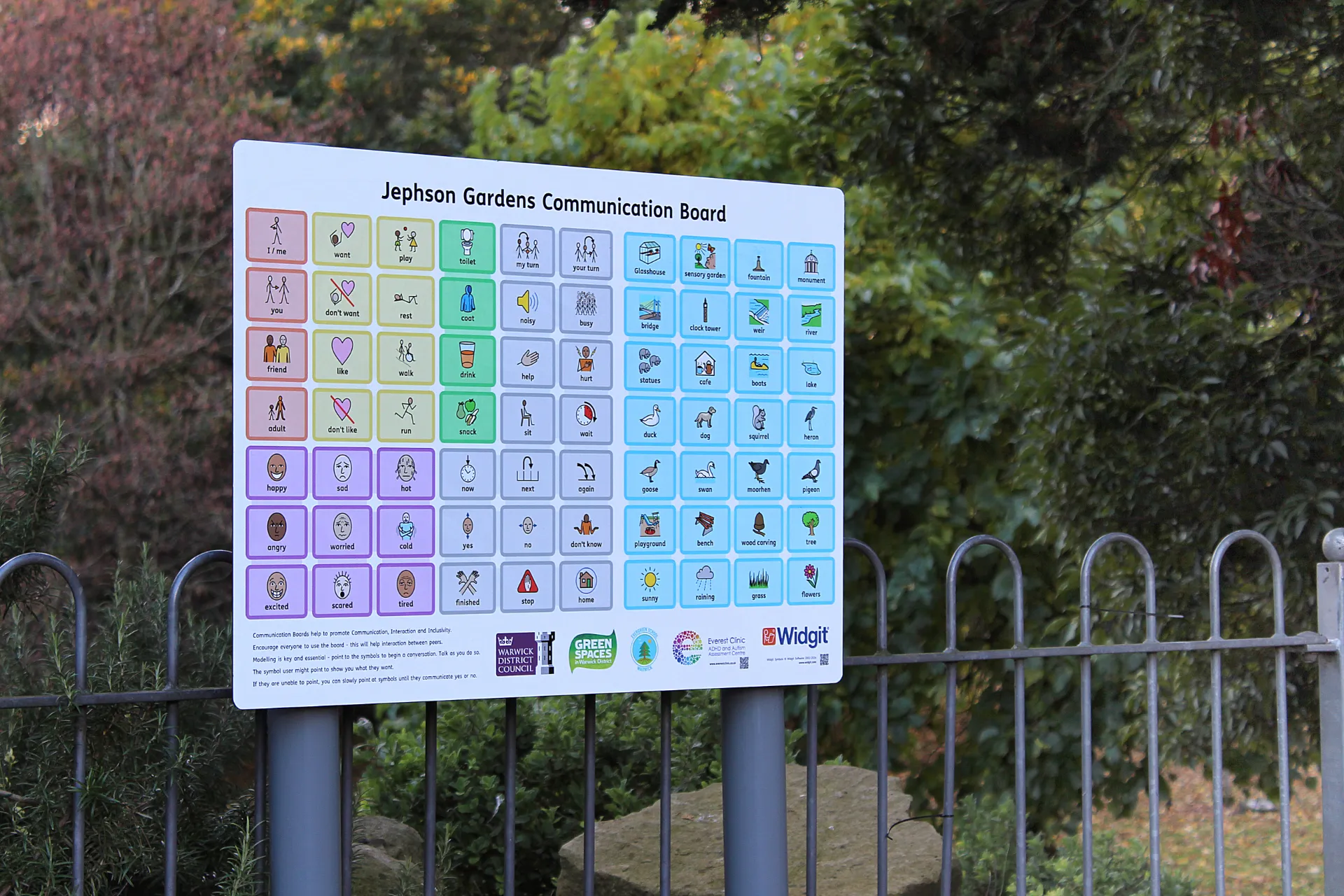
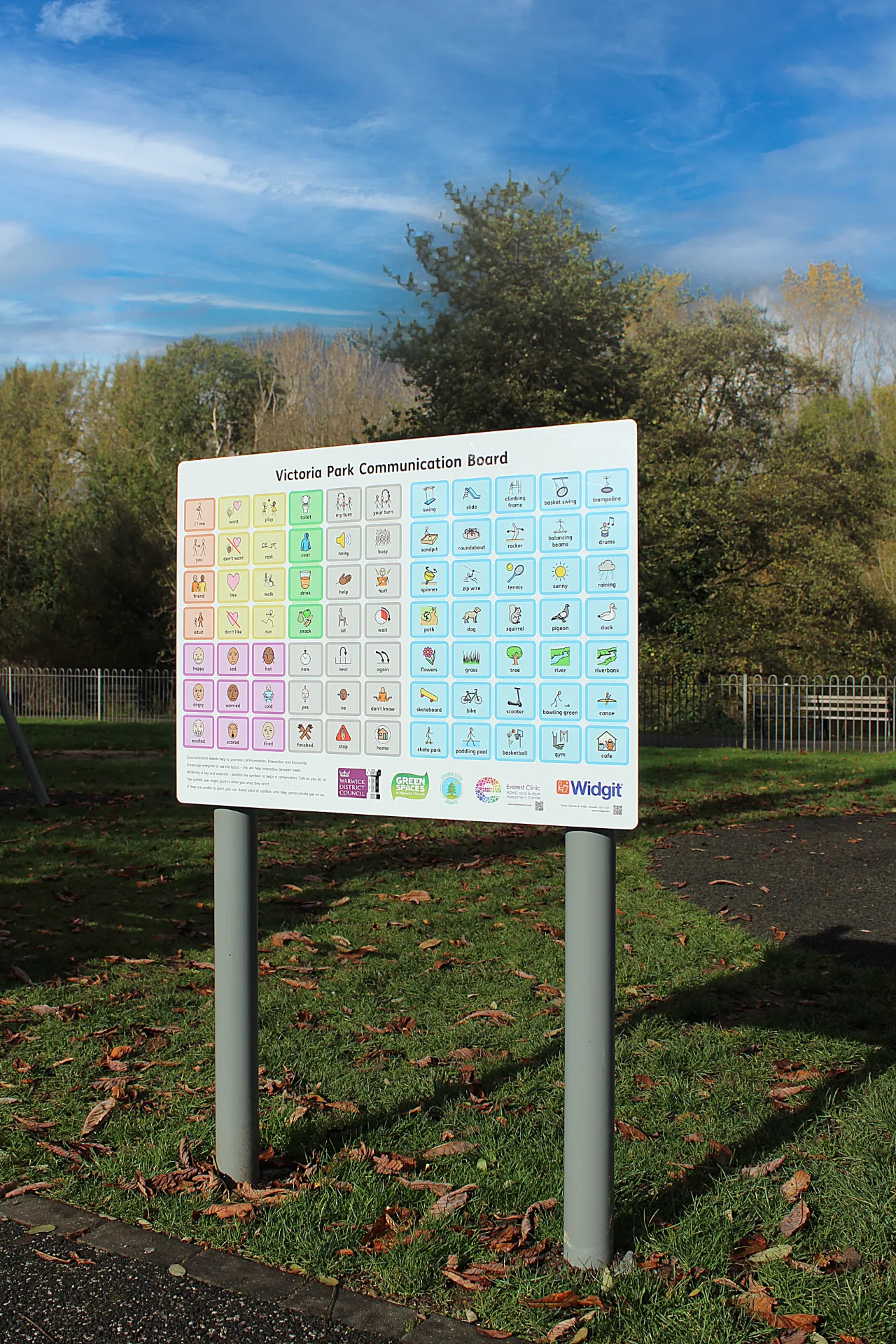
Graphic Signs partnered with Warwick District Council to deliver symbol-based communication boards across local parks, improving accessibility for children who are pre-verbal, autistic, or have learning disabilities. The initiative aimed to create more inclusive public spaces by replacing text-heavy signage with intuitive, visual communication tools that promote independence and confidence.


Warwick District Council is a local authority committed to maintaining inclusive, accessible public spaces for its diverse community. The Council works closely with schools, families, and support organisations to ensure its services reflect the needs of residents of all ages and abilities.

Traditional park signage often relies heavily on written instructions, limiting accessibility for children with additional communication needs. Following extensive consultation with parents, educators, and specialist support organisations, the Council commissioned Graphic Signs to manufacture a series of large-format, symbol-based communication boards.
The boards were designed to feature clear, engaging illustrations representing facilities, directions, and activities within each park. Every sign was tailored to its specific location to ensure maximum relevance and impact.
The first installations were rolled out across six prominent parks, with plans to expand the initiative district-wide following its initial success.

Manufacture of bespoke, symbol-based signage panels
Large-format, weather-resistant materials suitable for outdoor environments
Location-specific symbol selection for each park
Clear, high-contrast illustrations for ease of understanding
Collaborative production process based on stakeholder consultation
This project demonstrates how thoughtful, inclusive signage design can significantly enhance accessibility in public spaces. By prioritising collaboration and focusing on visual communication, Graphic Signs helped create environments where children with additional needs can navigate independently and confidently. The success of the initial rollout highlights the growing importance of neurodiversity-friendly infrastructure and shows how scalable, well-designed solutions can deliver meaningful social impact across entire communities.